- Place a pair of dumbbells on the floor. Lie on your back in between the dumbbells. Bend your knees and move your feet towards your butt.
- Grab the dumbbells and hold them above you. Allow your upper arms to remain on the floor. Begin the movement by pushing the dumbbells over your chest. Pause at the top and squeeze your chest muscles.
- Slowly bring the weights down to the starting position, allowing your arms to rest for a brief moment before beginning the next repetition.
Dumbbell Push-Up Power Builder: Gain Muscle
45 min
·
9 exercises
Develop upper body push-up strength and functional muscle with this intermediate dumbbell workout! Focus on pushing your power each session — in just a matter of weeks, you'll be cranking out push-ups with confidence. Gain muscle and improve upper body function!
Use a weight that gives a nice burn at 10 reps.
1:30 rest
These aren't just wall push-ups, I actually want you to push your whole body away from the wall! Explode!
1:30 rest
Make this a challenge by allowing your legs to go as straight as you can. Complete 10 per set.
1:30 rest
Building more chest power now! Aim to spend 4 - 6 seconds per rep!
1:30 rest
You don't have to go all the way down if you are unable to, just focus on lowering the body as low as you can!
1:30 rest
Holding onto this weight, use all triceps to push it overhead. Nothing should move except your lower arm.
1:30 rest
Again, only focus on the lowering portion! When you're about to collapse, drop your knees. This is one rep.
1:30 rest
Hold this pose for 15 seconds x 3. With 20-second rests between sets.
1:30 rest
Finally, get into a full push-up position & slowly lower your body down. Collapse when necessary and go again.
About this workout
Dumbbell Push-Up Power Builder: Gain Muscle is a free 45 min workout plan with 9 illustrated exercises for your triceps, abs, arms and chest. Follow the workout online, save it to your WorkoutLabs Fit account or download it as a printable PDF.
Tap any exercise in the workout to see the muscles worked, clear exercise illustrations and step-by-step instructions. Each workout includes sets, reps, rest times and notes so you can follow the plan without guessing.
Workout details
- Duration: 45 min
- Exercises: 9
- Training focus: Triceps, abs, arms and chest
- Equipment: Dumbbells
- Level: Intermediate
- Format: Interactive workout and printable PDF
For more ready-made training plans, try WorkoutLabs Fit. You can follow visual workouts, build your own routines, manage your training calendar and track your progress. Sign up today to claim your free week.
Questions about this workout
What equipment do I need for this workout?
You'll need dumbbells for this workout. Tap any exercise to see form instructions and possible substitutions if a piece of equipment isn't available.
How long does the Dumbbell Push-Up Power Builder: Gain Muscle take?
The full workout takes about 45 minutes, covering 9 exercises with prescribed sets, reps and rest periods. Using the built-in timers and auto-advance keeps you on pace from start to finish.
Is this workout suitable for my fitness level?
This is an intermediate workout, best suited to people with some training experience. Beginners can still follow it by reducing the weight, doing fewer sets or resting longer between sets – each exercise includes illustrated form instructions.
What muscles does this workout target?
This routine primarily works your chest, triceps, abs, obliques, shoulders. Tap any exercise in the workout to see a muscle diagram showing exactly which primary and secondary muscles it activates.
How often should I do this workout?
For gain muscle, improve function, aim to do this workout 2–3 times per week with at least one rest day between sessions. Progress by gradually adding weight or reps, and pair it with workouts for other muscle groups during the week.
Can I download or save this workout?
Yes – you can download this workout as a free printable PDF using the download button, or save it to a free WorkoutLabs Fit account to follow it on your phone, customize the exercises and track your progress.
Dumbbell Push-Up Power Builder: Gain Muscle
45 min
·
9 exercises
Develop upper body push-up strength and functional muscle with this intermediate dumbbell workout! Focus on pushing your power each session — in just a matter of weeks, you\'ll be cranking out push-ups with confidence. Gain muscle and improve upper body function!
Dumbbell Floor Chest Press


Use a weight that gives a nice burn at 10 reps.
Primary muscle group(s):
Chest
Secondary:
Abs, Shoulders, Triceps
Wall Push-Ups
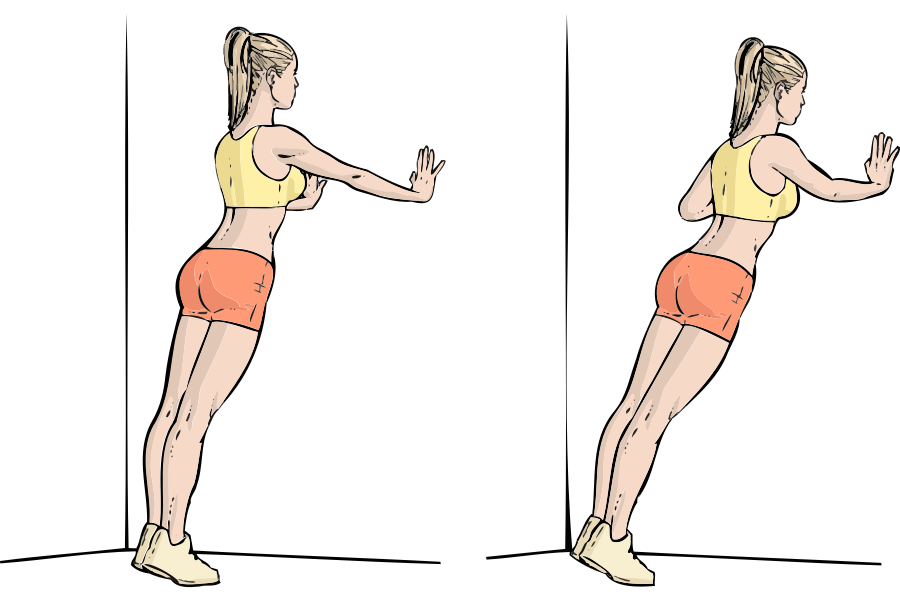

These aren't just wall push-ups, I actually want you to push your whole body away from the wall! Explode!
Primary muscle group(s):
Chest, Triceps
Secondary:
Abs
- Stand in front of a wall, extend your arms out to measure the correct distance. Brace your core and place your hands against the wall.
- Keeping a tight core, slowly lower your chest towards the wall.
- Pause once your upper arms form a 90 degree angle. Contract the chest muscles and push yourself back up to the starting position. Repeat.
Primary muscle group(s):
Chest
Secondary:
Triceps
- Stand in front of a wall, extend your arms out to measure the correct distance. Brace your core and place one hand against the wall.
- Keeping a tight core, slowly lower your chest towards the wall.
- Pause once your working arm forms a 90 degree angle. Contract the chest muscle and push yourself back up to the starting position.
- Repeat using the opposite arm.
Primary muscle group(s):
Chest
Secondary:
Abs, Shoulders, Triceps
- Come to the ground on your knees. Tighten your core and maintain a flat back.
- Position your hands on the ground in front of you, directly below your shoulders. Cross your feet in the back.
- Lower your chest towards the ground. Bend your elbows at a 60-degree angle until your chest is just above the ground. You should feel a stretch across your chest. Hold for a count of one.
- Without locking your elbows, push yourself back to the starting position by straightening your arms.
Bench Tricep Dips


Make this a challenge by allowing your legs to go as straight as you can. Complete 10 per set.
Primary muscle group(s):
Triceps
Secondary:
Shoulders
- Sit on a chair with your hands either next to your hips or slightly under the hips.
- Lift up onto your hands and bring your hips forward.
- Bend your elbows and lower your hips down, keeping shoulders down and hips close to the chair.
- Push back up but don’t lock your elbows and repeat.
Primary muscle group(s):
Triceps
Secondary:
Upper Back & Lower Traps
- Holding a pair of water bottles with an overhand grip, stand tall with your chest up and core braced. Bend at the hips while keeping your back completely flat.
- Once your upper body is parallel with the floor, bring your upper arms to your sides. Begin by pushing the water bottles back and behind you.
- Pause at the top of the movement and feel the contraction in your triceps. Slowly lower the water bottles and begin again.
Flat Bench Dumbbell Flyes

Building more chest power now! Aim to spend 4 - 6 seconds per rep!
Primary muscle group(s):
Chest
Secondary:
Abs, Shoulders, Triceps
- Holding a pair of dumbbells, sit on a flat bench and slowly lower yourself back.
- Keep a tight core as you push the dumbbells above your chest. The dumbbells will be facing one another and held together.
- With a slight bend in the elbow, open up your chest and slowly lower the dumbbells to the sides.
- When the dumbbells are parallel with the ground, pause, and return to the starting position.
Primary muscle group(s):
Chest
Secondary:
Abs, Shoulders, Triceps
- Stand between two cable stations with the dumbbell grip handles attached to the high pulleys on each side of you.
- Hold the handles with an overhand grip. Your arms should be outstretched.
- Bend your knees and hips slightly so that you are leaning forward, but not too far.
- Bend your elbows slightly and rotate your shoulders in towards the centre of your chest a little. Your elbows should be slightly behind you.
- Use a hugging motion, keeping your elbows in a fixed, bent position to bring the grip attachments together in front of your chest.
- Slowly return to the starting position until you feel a slight stretch in your chest muscles.
- Repeat.
Primary muscle group(s):
Chest
Secondary:
Shoulders, Triceps
- Sit on a pec deck machine with your back flat against the back rest.
- Grip the handles and make sure your arms are parallel to the floor. If not parallel,adjust the seat or handles accordingly. This is the start position.
- Exhale and slowly push the handles together squeezing your chest to the middle as you do so. Hold for a count of one.
- Inhale as you return to the starting position in a controlled movement.
- Repeat.
This exercise can be performed using an exercise band or pulleys. There are a variety of different machines with different placement of your forearms. With these, place your forearms on the pad, with your elbow bent to 90 degrees. Perform the exercise by squeezing your elbows together.
Knee Push-ups

You don't have to go all the way down if you are unable to, just focus on lowering the body as low as you can!
Primary muscle group(s):
Chest
Secondary:
Abs, Shoulders, Triceps
- Come to the ground on your knees. Tighten your core and maintain a flat back.
- Position your hands on the ground in front of you, directly below your shoulders. Cross your feet in the back.
- Lower your chest towards the ground. Bend your elbows at a 60-degree angle until your chest is just above the ground. You should feel a stretch across your chest. Hold for a count of one.
- Without locking your elbows, push yourself back to the starting position by straightening your arms.
Primary muscle group(s):
Chest
Secondary:
Abs, Shoulders, Triceps
- Place a pair of dumbbells on the floor. Lie on your back in between the dumbbells. Bend your knees and move your feet towards your butt.
- Grab the dumbbells and hold them above you. Allow your upper arms to remain on the floor. Begin the movement by pushing the dumbbells over your chest. Pause at the top and squeeze your chest muscles.
- Slowly bring the weights down to the starting position, allowing your arms to rest for a brief moment before beginning the next repetition.
Primary muscle group(s):
Chest
Secondary:
Abs, Shoulders, Triceps
- Get into position by placing your hands flat on the floor, directly below your shoulders.
- Extend your legs out behind you, with only your toes and balls of your feet touching the floor.
- Hold your body up and keep your back straight by tightening your abdominal muscles.
- Your neck and head should be bent slightly back.
- Lower your chest towards the ground by bending your elbows until your chest is just above the ground or you feel a stretching of your chest and shoulders. Hold for a count of one.
- Press upwards from your chest and shoulders, straightening your arms as you return to the starting position. Hold for a count of one.
- Repeat.
Seated Tricep Press


Holding onto this weight, use all triceps to push it overhead. Nothing should move except your lower arm.
Primary muscle group(s):
Triceps
Secondary:
Abs
- Sit on a bench with back support.
- Grip a dumbbell at one end using both hands. Your palms should be facing inward.
- Hold the dumbbell overhead with your arms fully extended. This is the the start position.
- Keep your upper arms close to your head (biceps roughly level with your temples) and near to 90degrees to the floor.
- Moving only your forearms, lower the dumbbell in a smooth arc behind your head until your forearms and biceps touch. Hold for a count of one.
- Return to the start position by using the triceps to extend your arm and raise the dumbbell. Exhale as you do this.
- Repeat.
This exercise can be performed standing. However, it places an extra strain on your back so is not recommended for people with lower back problems. You can also perform this exercise using an EZ bar or straight bar with a close grip behind your head, palms facing forward.
Primary muscle group(s):
Triceps
Secondary:
Forearms
- Attach a rope to the bottom pulley of a cable station.
- Grip the rope with both hands using a neutral grip. Turn your body away from the cable station.
- Fully extend your arms until your hands are directly above your head pointing to the ceiling.
- Keep your elbows close to your head. This is the start position.
- Slowly lower the rope behind your head, keeping your upper arms stationary, inhaling as you do so.
- When your triceps are fully extended, hold for a count of one while squeezing your triceps.
- Return to the starting position by flexing your triceps and extending your arms. Exhale as you do so.
- Repeat.
This exercise can be performed seated on a plain bench, or one that has a back support You can also use a single dumbbell instead of the rope.
Primary muscle group(s):
Triceps
- Begin the movement by stepping on to a resistance band with your feet at shoulder-width, toes pointed slightly out.
- Push the handles of the band overhead while keeping a slight bend in the elbow. Brace your abdominals and do not arch your back.
- Slowly lower your hands behind your head using only the forearms. The upper arms will stay in place with the elbow pointed up.
- Push the handles back up, focusing the tension in the triceps.
Incline Push-ups

Again, only focus on the lowering portion! When you're about to collapse, drop your knees. This is one rep.
Primary muscle group(s):
Chest
Secondary:
Abs, Shoulders, Triceps
- Set up a bench or stable elevated surface. Begin with both hands on the bench at shoulder-width or just outside of shoulder-width.
- Place your feet straight behind you while you tighten your abs and engage the hips. Your hips should not dip or elevate too high during the movement.
- Slowly lower yourself towards the bench. Once your upper arms are parallel with the floor, pause, and return to the starting position.
Primary muscle group(s):
Chest
Secondary:
Triceps
- Set a barbell in a weight rack at the low end of a decline bench, making sure it is at a height you can reach without fully extending your arms.
- Secure your feet under the stirrup, bar or strap at the high end of the bench and lie flat on your back with the rack slightly behind you.
- Using an overhand grip, grip the bar with your hands slightly wider than your shoulder width apart.
- Push up to lift the bar from the rack and hold it directly over you with your arms locked.
- Bend your elbows to slowly lower the barbell until it slightly touches your chest, inhaling as you do so.
- Drive the weight back up by contracting your pec muscles and return to the start position, exhaling as you do so.
- At the top of the movement, lock your arms and squeeze your chest muscles.
If you are new at this exercise, you should use a spotter. If no spotter is available, then be conservative with the amount of weight used. Do not let the bar drift too far forward, it should touch down your lower chest only. Don't bounce the weight off your chest. Keep full control of the barbell at all times. When performing this exercise, use a 2:1:1 count. That is a count of two on the downward movement. Pause for a count of one. A count of one one the upward movement. You can also use dumbbells or exercise bands to perform this exercise.
Primary muscle group(s):
Chest, Triceps
Secondary:
Abs, Shoulders
- Place a pair of dumbbells on the floor next to a decline bench. Secure yourself in the bench. Pick up dumbbells and hold them above you with a slight bend in the elbow.
- Keeping the dumbbells in line with your chest, slowly open up your arms to the sides.
- Stop when your upper arms are parallel with the floor.
- Squeeze your chest muscles and slowly return to starting position. Repeat.
Plank
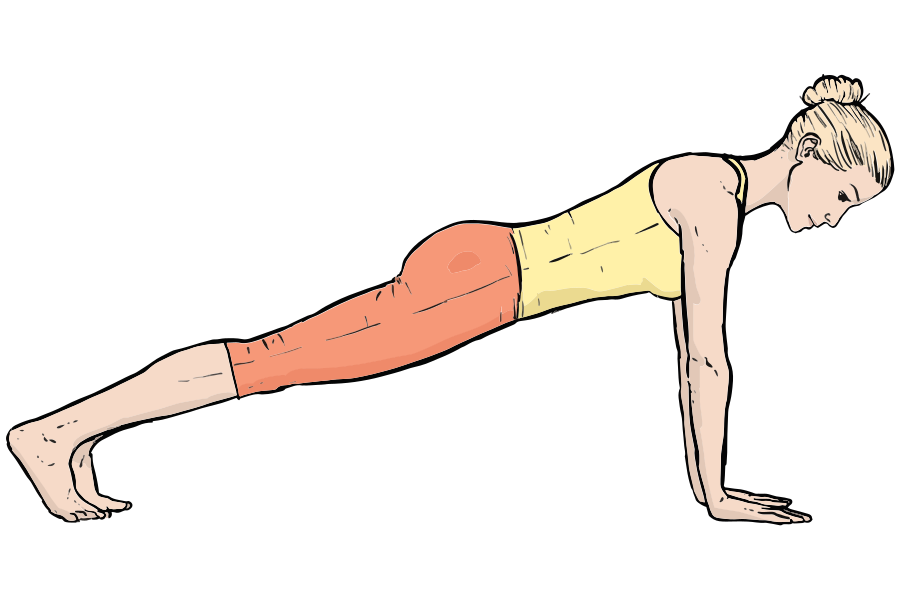


Hold this pose for 15 seconds x 3. With 20-second rests between sets.
Primary muscle group(s):
Abs, Obliques, Shoulders
Secondary:
Glutes & Hip Flexors, Quadriceps, Triceps, Wrists
Pronunciation:
koom-bhah-KAH-sah-nah
- Begin in Downward Facing Dog. Bring your hands as wide as your shoulders and feet as wide as your hips. Spread your fingers wide. Reach your tailbone toward the sky behind you.
- With an inhale, shift forward into Plank, bringing your shoulders over your wrists. Engage your core and legs. Gaze diagonally downward.
- Hold the pose and take slow, deep breaths.
- Push back to Downward Facing Dog with an exhale.
Modification: Lower your knees to the floor.
Avoid this pose if you have carpal tunnel syndrome.
Static Push-ups

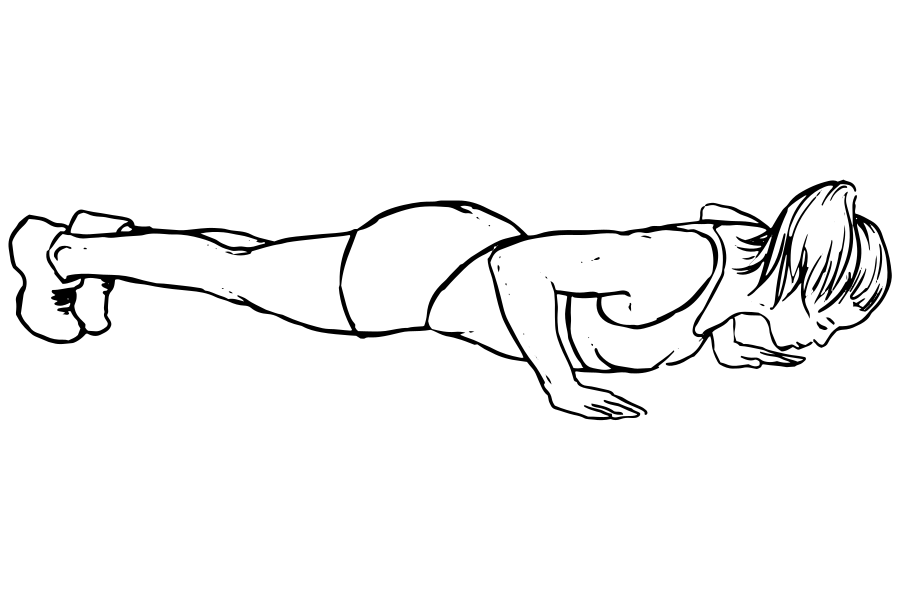
Finally, get into a full push-up position & slowly lower your body down. Collapse when necessary and go again.
Primary muscle group(s):
Abs, Chest
Secondary:
Abs, Shoulders, Triceps
- Position yourself in a plank position, supporting your body with your toes and place your hands underneath your shoulders with elbows extended. Keep your abs engage and prevent letting your hips sag.
- Lower your chest to the floor and hold for 30 seconds.
- Straighten up to starting position.
Primary muscle group(s):
Abs
- From a push-up position walk your hands and feet away from the centre of your body until you form an ‘X’ shape.
- Engage your core and hold this position for the designated amount of time.
- Walk your hands and feet back into a push-up position to complete the exercise.
Primary muscle group(s):
Abs
- Get into a face down position on the floor supporting your upper body on your forearms. Your elbows should be bent at 90 degrees.
- Extend your legs straight out behind you, supporting them on your toes and balls of your feet.
- Keep your body in a straight line by tightening your abdominal and oblique muscles.
- Hold for as long as possible.
For extra balance training and core strengthening, you can lift one arm or leg.
Workout done!
Exercises done
of 9
Total time
Access 1000+ more workouts, build your own plans and track progress with Fit
Start my free week
Free 7-day trial • No charge today
We're not done yet!
Exercises done
of 9
Approx. time left
32:15
You can switch gender of illustrations here
Got it
Swap that with...
What's new
Recently added
- Copy calendar contents between clients (Jan 19)
- Disable messaging for individual clients (Jan 19)
- Sort your client list in a few practical ways (Jan 19)
- Message multiple or all of your clients at once (Jan 17)
- 10 new exercises (Jan 10)
- Sidebar 'notepads' for privates notes (Dec 23)
- Supersetting functionality (Nov 22)
- 15 new exercises (Nov 12)
- Clients can now move workouts (Nov 7)
- 15 new exercises (Oct 10)
- 9 new exercises (Sep 14)
- 10 new exercises (Aug 30)
- Share workouts on Instagram and browser notifications (Aug 29)
Coming soon
- Your branding in client email notifications
- Share workouts on Pinterest
- Tools and resources to help you find new clients
Get more updates on Twitter
Uh oh! 5 workouts in your calendar will be permanently overwritten. Proceed?
The 5 mile run at the park with Mary custom activity will be deleted. Proceed?
Permanently delete ALL FUTURE WORKOUTS and activities in your calendar? This cannot be undone.
You've used your
5 free workouts limit. Start a free 7-day Fit trial to keep training, save workouts and build your own plans 👍
5 free workouts limit. Start a free 7-day Fit trial to keep training, save workouts and build your own plans 👍
Free 7-day trial • No charge today
Committed? Upgrade to yearly and save 25%!
Our yearly subscription is only $89.95 – $29.45 less than paying monthly*. That’s only $7.49/mo!

*$9.95/mo x 12 months = $119.40
OMG YES! Switch to yearly

, join thousands of users worldwide!
★★
★★
★★
★★
★★
4.5 user rating
Enjoy hundreds of workouts
or edit and create your own
Follow simple illustrations
with videos and written instructions
Manage your calendar
to get fit on your schedule
I'm committed 💪
$89.95
per
year
year
Comes to $7.50/mo
Save 25%
Best value &
popular option
popular option
One step at a time
$9.95
per
month
month
billed monthly
Where should we send
the workout link? 📲
the workout link? 📲
We’ll never call or send spam, and your number will
remain private. 🔒 or view the workout here
remain private. 🔒 or view the workout here
We’ll never call or send spam, and your
number will remain private. 🔒
number will remain private. 🔒
Delete forever?
Yep, toss it!