Gentle Post-Surgical Strength (Sternal Precautions)
A supervised strength cardiac rehab program for adults recovering after open-heart surgery, safely rebuilding muscle while carefully following sternal precautions.
Program overview
Crafted for phase 2 (outpatient) cardiac rehab patients recovering from sternotomy surgery with sternal precautions, this program generally covers the initial 1–2 months post-op.
Designed specifically for patients with low-to-moderate functional levels and low-to-moderate risk stratification, it emphasizes strength and resistance training to safely rebuild muscular strength and endurance while respecting sternal precautions. The plan begins with basic equipment (bands, light dumbbells) and advances gradually to moderate-progressive loads (moderate dumbbells), following a beginner-level progression.
With bi-weekly advancements, the program offers whole-body strengthening (lower and upper body) while carefully introducing safe chest stretching and strengthening exercises at appropriate stages. Delivered in a supervised in-clinic CR setting for adults (18–75), the structured approach ensures safe sternum recovery, restores strength, and builds confidence through controlled movements under expert guidance, preparing participants for long-term wellness.
Additionally, a special one-week protocol is available for the rare instances when patients begin cardiac rehab earlier than one month post-op.
Exercise program details
Breakdown and suggested frequency
“Early Entry to CR <1 month post-op” Weeks 1+
Gentle seated exercises focusing on lower body strength and upper body range of motion, respecting sternal precautions.
- Intensity: RPE: 9-11, HRR: 20-40%
- Frequency: 3-5 sessions/week
- Duration: 10-14 min
Weeks 1-2
Supported standing exercises with bodyweight movements including gentle upper body strengthening with light resistance bands, maintaining sternal precautions.
- Intensity: RPE: 9-11, HRR: 20-40%
- Frequency: 2-3 sessions/week
- Duration: 10-12 min
Weeks 3-4
Increased standing reps that include light dumbbell and moderate resistance with bands, within sternal limits. Introducing very light chest stretching and strengthening.
- Intensity: RPE: 10-12, HRR: 20-40%
- Frequency: 2-3 sessions/week
- Duration: 10-14 min
Weeks 5-6
Progressive upper and lower body strength with structured resistance adjustments, minimal assistance. Chest strengthening progressing to light-moderate levels.
- Intensity: RPE: 11-13, HRR: 30-50%
- Frequency: 2-3 sessions/week
- Duration: 10-14 min
Weeks 7+
Strengthening exercises that include relatively more progressive dumbbell and bodyweight exercises as sternal precautions begin to become less and less.
- Intensity: RPE: 11-13, HRR: 30-50%
- Frequency: 2-3 sessions/week
- Duration: 10-14 min
Alignment with AACVPR/ACSM Guidelines: This Phase 2 program starts with low-intensity resistance (RPE 9-11, HRR 20-40%) and progresses to moderate (RPE 11-13, HRR 30-50%), adhering to outpatient guidelines for low-moderate functioning patients with sternal precautions. The major focus is frequency (2-3 sessions/week), sets (1-3), and repetitions (10-20) to support safe strength gains, with 3-5-min warm-ups (RPE 8-11) and a 3-5-min cool-down (RPE 8-9) meeting prep/recovery standards.
Updated Feb 26, 2026

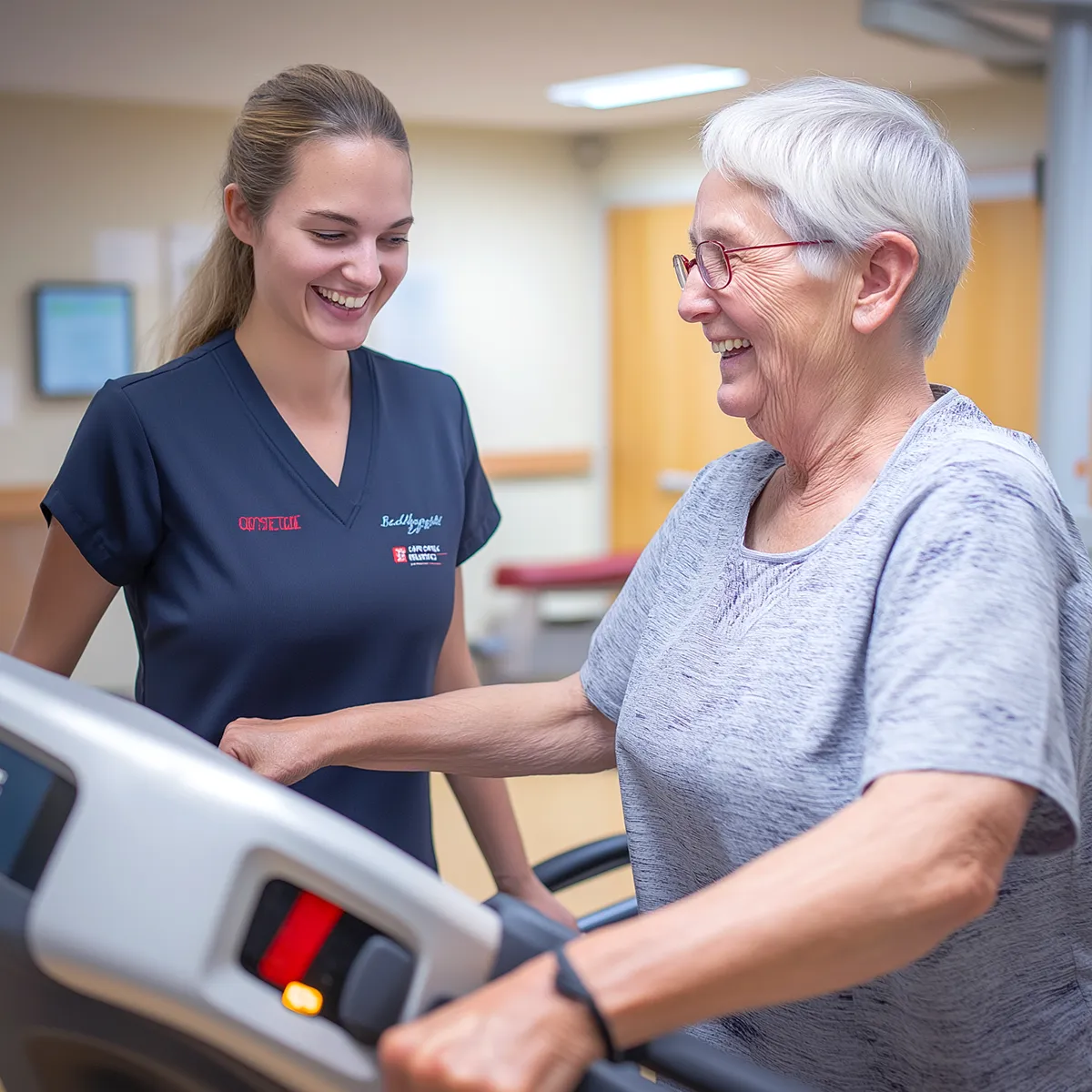 Step to the Beat: Post-MI Walking Program
Beginner
NO EQUIPMENT
12workouts
A supervised cardiac rehab walking program for adults post-heart attack, gradually building endurance and confidence through gentle aerobic exercise and stretching.
VIEW PROGRAM
Cardiac rehab
Step to the Beat: Post-MI Walking Program
Beginner
NO EQUIPMENT
12workouts
A supervised cardiac rehab walking program for adults post-heart attack, gradually building endurance and confidence through gentle aerobic exercise and stretching.
VIEW PROGRAM
Cardiac rehab
 Heart Strong Recovery: Post-Surgical Strength (No Restrictions)
Beginner
Dumbbells
Resistance Bands
13workouts
A supervised resistance training plan guiding cardiac rehab patients safely from basic to progressive loads, restoring full-body strength post-surgery.
VIEW PROGRAM
Cardiac rehab
Heart Strong Recovery: Post-Surgical Strength (No Restrictions)
Beginner
Dumbbells
Resistance Bands
13workouts
A supervised resistance training plan guiding cardiac rehab patients safely from basic to progressive loads, restoring full-body strength post-surgery.
VIEW PROGRAM
Cardiac rehab
 Heart Harmony: Mind-Body Yoga for Stress Reduction
Beginner
NO EQUIPMENT
12workouts
Beginner-level yoga for cardiac rehab Phase 4, featuring calming stretches, breathing exercises, and meditation, promoting stress relief and heart health.
VIEW PROGRAM
Heart Harmony: Mind-Body Yoga for Stress Reduction
Beginner
NO EQUIPMENT
12workouts
Beginner-level yoga for cardiac rehab Phase 4, featuring calming stretches, breathing exercises, and meditation, promoting stress relief and heart health.
VIEW PROGRAM